Copper is essential to the human body. Copper jewellery and drinkware are also objects people find beautiful. Those two ideas can both be true without turning a cup or a bracelet into a cure.
It is easy to see why copper has returned to the wellness conversation. Its warm tone looks unlike stainless steel. It carries a sense of history. And in a world of disposable objects, it invites a slower, more deliberate routine. But the health claims that sometimes surround it deserve a closer read.
The quick take
Established: copper is an essential nutrient involved in normal biological processes. We usually get it from food. [1]
Not established by that fact: wearing copper or using a copper cup treats pain, inflammation or another condition.
Worth remembering: excess copper exposure can be harmful. Product materials and safe use matter. [1, 2]
The science is real. The shortcut is not.
The US National Institutes of Health describes copper as an essential mineral and a cofactor for enzymes involved in processes such as iron metabolism, energy production and connective-tissue synthesis. Most people obtain copper from a varied diet. [1]
That science concerns copper in the body. It does not establish that a ring relieves joint pain, or that a cup provides a meaningful nutritional benefit. A claim about a particular product needs evidence for that particular product and how it is used.
Health Canada sets a maximum acceptable concentration of 2 mg/L for copper in drinking water and notes that high exposure can cause adverse effects. This drinking-water guideline is context for safe exposure; it is not proof that a specific cup changes water in a beneficial or harmful way. [2]
A good reason to choose an object can be its design and the place it earns in your day.
So why does copper still appeal?
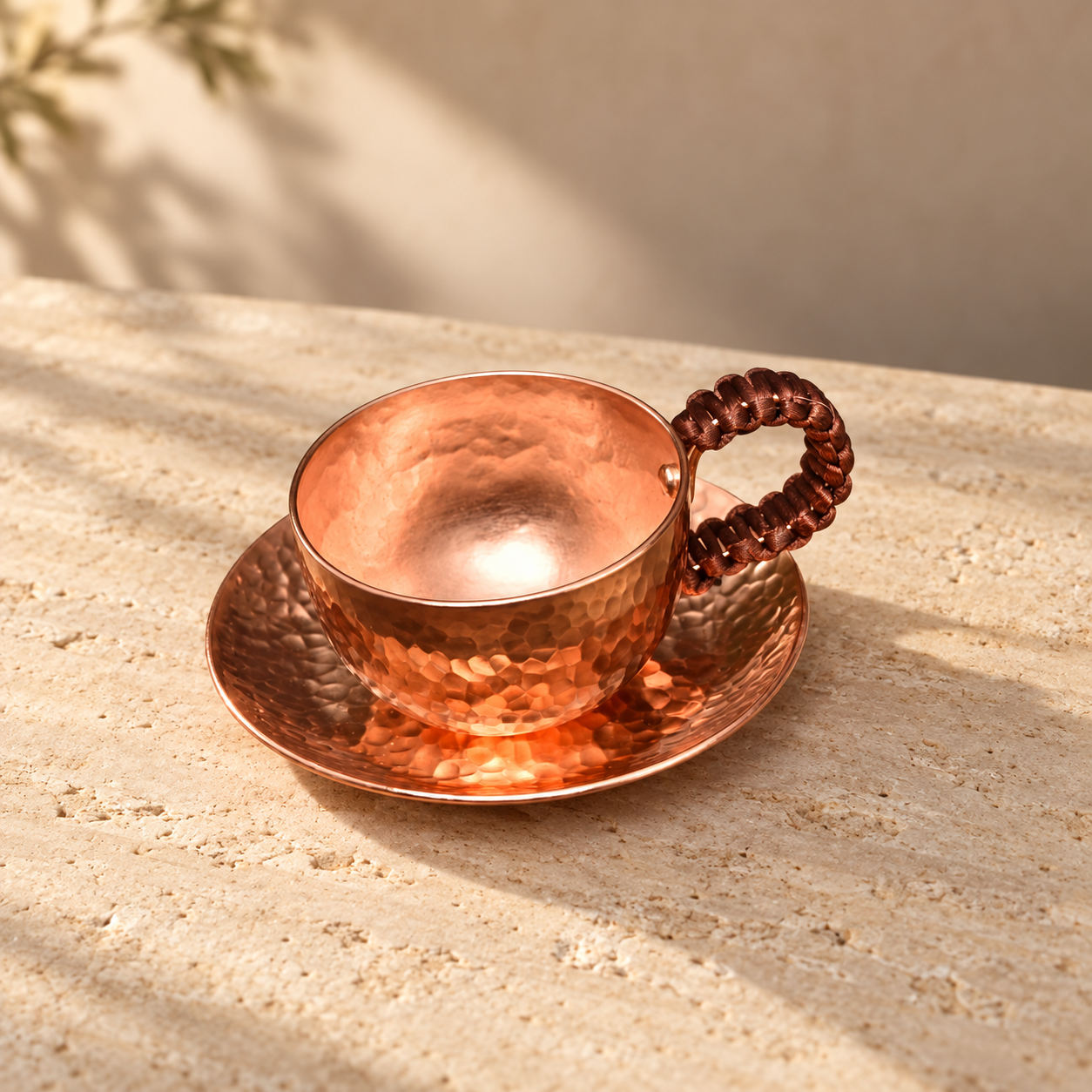
Because everyday rituals are made of small choices. The piece you put on before you leave home. The cup you reach for when you make tea. Their value can be personal and aesthetic, with no medical promise attached.
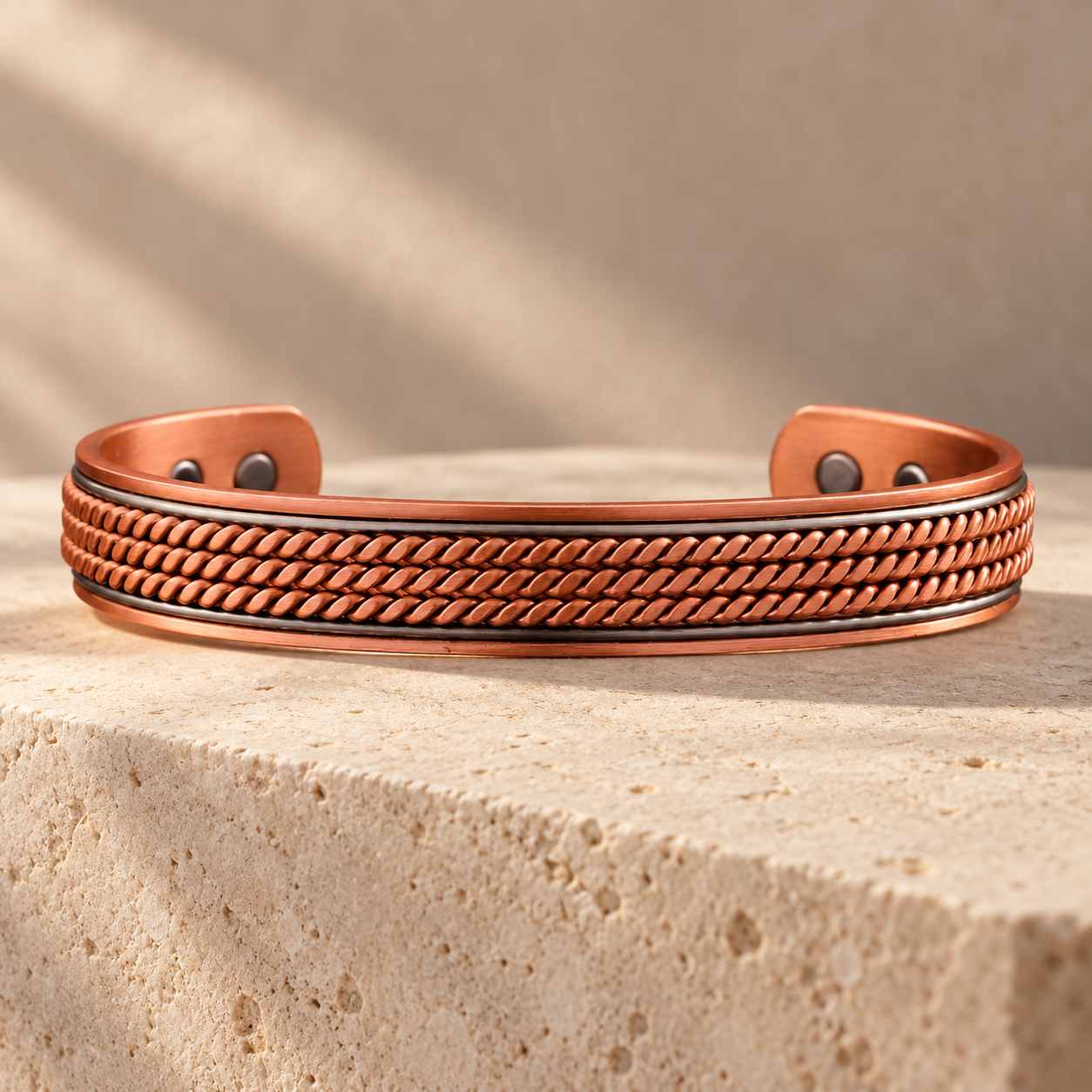
At KindCopper, the starting point is wearable design: warm metal tones, simple forms and pieces intended to be part of an ordinary day. Tea objects form a separate ritual collection. Each deserves to be judged on its finish, comfort, material, care and suitability for its intended use.
Our take: keep the story honest
The strongest case for copper in a daily routine is also the most straightforward: it is a distinctive material with visual character. Choose jewellery for its shape and feel; choose drinkware for its construction and suitability for food contact. Neither requires a promise of detoxification or pain relief.
Before buying, check the actual material and finish, sizing, care instructions, price, shipping and return terms on the KindCopper product page. A food-contact item should also have clear guidance for its intended drinks and cleaning.
A little more intention, every day.
Explore KindCopper's wearable pieces and the evolving ritual collection. See the current product details before choosing what is right for you.
Explore KindCopperOpens KindCopper. Availability and product details are shown there.
Sources & method
We checked authoritative general references on copper nutrition and drinking-water safety. We did not conduct a clinical trial, independently test KindCopper products, or obtain a medical expert review. These sources support the general statements above, not a medical claim for the featured products.
- National Institutes of Health, Office of Dietary Supplements — Copper: Fact Sheet for Health Professionals.
- Health Canada — Guidelines for Canadian Drinking Water Quality: Copper.
About this feature
Med Evidence Report is an editorial presentation created and funded by KindCopper. KindCopper sells the products linked in this article and may benefit from purchases. It is not an independent medical publication. The article is for general information and does not replace advice from a qualified health professional.